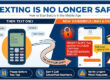

The “Later” Button is Your Biggest Security Risk: Why Updates Can’t Wait
In the world of IT, we see it every day: a notification pops up, and the instinctive reaction is to click “Remind me tomorrow.” We get it. You’re in the middle of a meeting, or you finally hit your stride on a project. But in 2026, that “Remind me tomorrow” button can be an open invitation to cybercriminals.
Your IT support company’s job is to keep your systems running smoothly. The single most effective way you can help is by staying on top of your device updates.
BONUS: Read our classic Super Mario article to understand why even the most established systems still have hidden trap doors.
More Info:
Update Notice
HDF InfoLine
Update Your Browser
HDF InfoLine
Dell Command | Update
HDF InfoLine

Is your computer behaving strangely?
Many devices are configured by default to install patches for you automatically in the background. However, many services can’t be patched while the operating system is running. So the device will partially install the patch, and then set a flag so that the remaining part will be patched upon the next reboot.
!!! Partially patched systems can lead your device to operate “strangely”. This leads us even more toward the old adage… if your computer is acting up, REBOOT THE COMPUTER. This will complete any unfinished patches. We recommend rebooting at least once a week.
Why the Delay? Understanding “Update Fatigue”
If you feel annoyed by update notifications, you aren’t alone. Update Fatigue is a real phenomenon where the sheer volume of notifications leads to “alert blindness.”
- The Procrastination Trap: We often think, “It’s just a small patch; it won’t matter if I wait a week.”
- The Reality: In 2026, AI-powered cyberattacks can identify and exploit a new vulnerability within hours of its discovery. A “small patch” is often a digital shield against a very specific, very dangerous spear aimed at your data.
What Happens If You Don’t Update?
Ignoring updates isn’t just a minor technical oversight; it has real-world consequences:
- Security Breaches: 57% of devices running legacy firmware are currently exploitable. Updates often contain “security patches” that close doors hackers use to install ransomware.
- Performance Degradation: Updates don’t just fix bugs; they optimize how your device uses its battery and processor. An unpatched device can be a slow device.
- Software Incompatibility: Eventually, your apps (like Teams, Zoom, or Excel) will stop working correctly because they require the latest system files to run.
- Data Loss: Unstable, outdated systems are significantly more prone to “blue screen” crashes that can corrupt your active files.
Which Devices Need Your Attention?
It isn’t just your laptop. If it connects to the internet, it needs an update.
- Workstations: Windows PCs and Macs.
- Mobile Devices: iPhones, iPads, and Android smartphones.
- Network Gear: Routers and Wi-Fi access points.
- IoT Devices: Smart cameras, printers, and even smart lightbulbs in the office.
The “Update Signals”: What to Look For
Your devices are actually quite good at telling you they need help. Look for these “tells”:
- Windows: A small circular arrow icon with a red, blue or orange dot in the bottom-right Taskbar
 , or a similar dot on the shutdown icon .
 - macOS: A red badge on the “System Settings” icon in your Dock.
- Mobile: A “1” badge on your Settings app or a persistent notification in your pull-down tray.
- The “Slow-Down”: If your device is acting sluggish or apps are crashing, it’s often a sign that a pending update is waiting to resolve a conflict.
 , or a similar dot on the shutdown icon
  .
.Step-by-Step: How to update most devices
While Windows handles the software, your hardware needs its own maintenance. For those using Dell machines, we recommend running Dell Command | Update once a month:
- Click the Start button and type “Dell Command.”
- Open the Dell Command | Update app.
- Click Check to scan for latest drivers, BIOS, and firmware updates.
- If updates are found, click Install.
- Note: Your computer will likely need to restart, especially for BIOS updates. Ensure your laptop is plugged into power, and do NOT unplug any devices while it is updating!
- Click the Start button and select Settings (the gear icon).
- Click Windows Update in the bottom-left sidebar.
- Select Check for updates.
- If updates are found, click Download & Install.
- Pro Tip: If you see “Restart required,” do it before you leave for the day.
- Click the Apple Menu () in the top-left corner.
- Select System Settings.
- Click General > Software Update.
- If an update is available, click Update Now or Upgrade Now.
- Go to Settings.
- Tap General.
- Tap Software Update.
- Select Download and Install.
- Open Settings.
- Scroll down and tap System or Software Update.
- Tap Check for update or Download and install.
Our Recommendation: The “End of Day” Rule
To combat update fatigue without losing productivity, adopt the End of Day Rule: If you see an update notification during the day, ignore it once, but before you lock your computer to go home, close all of your programs, initiate the update and walk away. It will be ready for you to log in the next morning… updated.
Stay updated, stay secure. If you have any trouble with a specific update, reach out to us!
If you have questions about this, please let us know and we will be happy to assist you.
Take care,